
Week 1 of 6 — your focus starts here
Whether you're a student reading this yourself, or a parent or carer keeping tabs — welcome to The Home Straight.
For the next six Fridays, we'll be sending you a short, practical email with specific tasks for the coming week across six subjects: English, Maths, Science, MFL, History and Geography. Each email will tell you exactly what to focus on that week, drawn directly from our subject teams.
This isn't about piling on the pressure. It's about making these final weeks feel manageable — one subject, one week at a time.

For students: you don't need to tackle everything in one sitting. Work through the subjects in whatever order suits you, and use the tasks to structure your evenings and weekends.
For parents and carers: you don't need to know the content to be helpful. Knowing what your child is working on this week gives you something concrete to check in about — and that matters more than you might think.
This week’s focus
-
✅ This week, prioritise revising the gaps in your Literature knowledge following your mock examinations. You’ll be looking at one or more of your texts: An Inspector Calls, A Christmas Carol, and Unseen Poetry - focus your efforts on your weakest areas to make the most difference.
You could:
revise: plot, characters, themes, and key quotations
use GCSEPod to access instructional videos and complete “check and challenge” quizzes
create revision materials to target weaker areas within each text and plan and attempt responses to new exam-style questions.
use your English revision booklets
for Unseen Poetry, practise identifying the key elements of a poem using the 5Ws (who, what, where, when, and why), as well as completing a timed 20-minute written response.
❓TEST ME TIPS: Students have been provided with a ‘Test Me’ booklet, which contains a range of questions and answers to support regular quizzing and consolidation of the core knowledge required for their exams. Make sure to balance revision of both Language and Literature, with a particular focus on their identified areas for development.
-
✅ Work through all the sections for Paper 1 in your personalised Pinpoint booklet.
Access help online by searching for the topic within SPARX, MathsGenie or CorbettMaths.
Pinpoint booklets are individually produced for each student, based on a Question Level Analysis of your maths paper in the last mock exams. They specifically target your weakest areas, making them the best way to improve your grade.
✅ As a "doing subject" the best way to revise maths is to practice maths. And the best way to do this is using past papers. Papers can be accessed online using MathsGenie or pick them up in school.Work on "a mark a minute" and split the paper up into two chunks of 40 marks rather than trying to do the whole paper in one go.
-
Each week in science you should focus on two of the science subjects, revising a key topic that we will choose for you. Please remember, that this revision is just a small part of what you should be completing independently.
Most weeks will follow the same pattern:
1. Core Knowledge Revisit: Here you will practice questions from your core knowledge booklets that you have completed previously. You should keep practicing until you can remember the knowledge off by heart! You could even ask a friend/parent to quiz you on the questions.
2. Core Knowledge Revise: Here you will learn the answers to questions from your core knowledge booklets that you may not have completed yet. Again, keep practicing until you know all the answers!
3. Independent Revision: Here you will go into more detail in the chosen topics by watching revision videos. You should pause videos at important points and make mind-maps or flash cards. Try writing yourselves questions that you can test yourself on later.
4. SPARX Questions: We will set Sparx questions to match your revision. Remember you can access SPARX independently whenever you want to practice!
Biology Focus: The Digestive System✅ Core Knowledge Revisit: Test yourself on B1 Cell Biology questions Biology Paper 1 Core Knowledge Book
✅ Core Knowledge Revise: Learn all B2 Organisation questions from Biology Paper 1 Core Knowledge Book
✅ Revision Videos:
✅ Complete questions on these topics on SPARX
Chemistry Focus: Ionic and Covalent Compounds
✅ Core Knowledge Revisit: Test yourself on C1 Atomic Structure questions Chemistry Paper 1 Core Knowledge Book
✅ Core Knowledge Revise: Learn all C2 Structures and Bonding questions from Chemistry Paper 1 Core Knowledge Book
✅ Revision Videos:
✅ Complete questions on these topics on SPARX
-
PART ONE:
Practice your key verbs in the main tenses by using your revision mindmaps, Languagenut and BBC Bitesize.
Focus on regular verbs and common irregular verbs in the present (I do...), preterite (Spanish)/perfect (French) (I did...), imperfect (I used to do...), conditional (I would do...), near future (I am going to do...) and simple future (I will...).
Key verbs to revise in Spanish: jugar, comer, ver, tener, hacer, ir, ser, estar.
Key verbs to revise in French: jouer, manger, regarder, avoir, faire, aller, etre. All 6 pronouns (I, You, He/She, We, You plural, They).Make a poster, mindmap or flashcards with this information.
PART TWO:
Revise your speaking conversation answers from your flashcards (Ryburn) or your speaking booklets (Honley and Brooksbank).
Look, cover, say aloud, check. Get someone at home to test you by asking the questions and listening to your answers.
Remember: THREE details per answer = a developed response.
-
Your aim this week is to gain confidence on the chronology and consequence of events in WW1, and for the America unit, learn what happened in which decades and what the impact of those events were on the Americans.
✅ STEP ONE: Students have been provided with four double sided A3 revision sheets (one for each unit). This week, complete the ones on America and WW1. You can check your answers using the answer sheets available on Teams.
✅ STEP TWO: Create revision notes from the revision guides on any specific topics you are unsure of in these two units.
✅ STEP THREE: When you are confident with the knowledge, look at the example exam questions at the front of your revision guide and make bullet point plans for how you would answer those questions.
❓TEST ME TIPS for parents and carers: Quiz students on the A3 sheets
-
Copy and complete this Mind Map Template (2 pages)
✅ One mind map for Coastal Landscapes
✅ One mind map for River Landscapes.
Each template should take between 60-90 minutes.
To complete the mind maps you can use the Internet Geography website - the QR codes on the maps, and the links above both take you to the relevant pages. You can also use your exercise books and knowledge organisers.
Technique of the week
🧠 Mind mapping
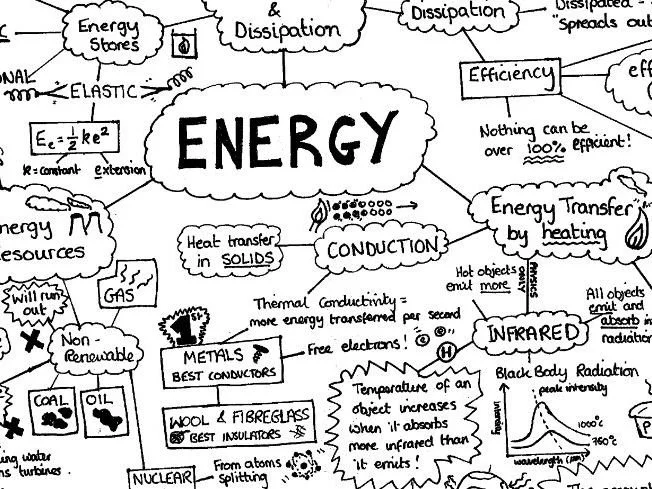
Mind maps get dismissed as "just drawing". But done properly, they're one of the most effective ways to see how ideas connect, and spot the gaps in what you actually know.
How to do it well:
Start with a single topic/theme/character in the centre — not a whole subject. Mr Birling, not An Inspector Calls. Cells, not Biology. Then branch outward: key facts, linked ideas, examples, dates. Use colour if it helps, but don't spend the session making it pretty. The thinking is the point, not the artwork.
The real test: close your notes, take a blank page, and try to redraw it from memory. What you can't remember is what you revise next.
Tip for parents: ask your child to talk you through their mind map. They don't need to explain it well — just the act of saying it out loud reinforces the memory. You don't need to understand the topic to help.
This week's resource:This video digs down into how best to use mind maps for active recall - don’t worry that she mentions A level - the revision technique is relevant to you now.
A reminder that your teachers are already supporting your revision in school — these emails are designed to complement that work, not replace it. If anything here raises questions, please ask your subject teacher.
The next email lands next Friday.